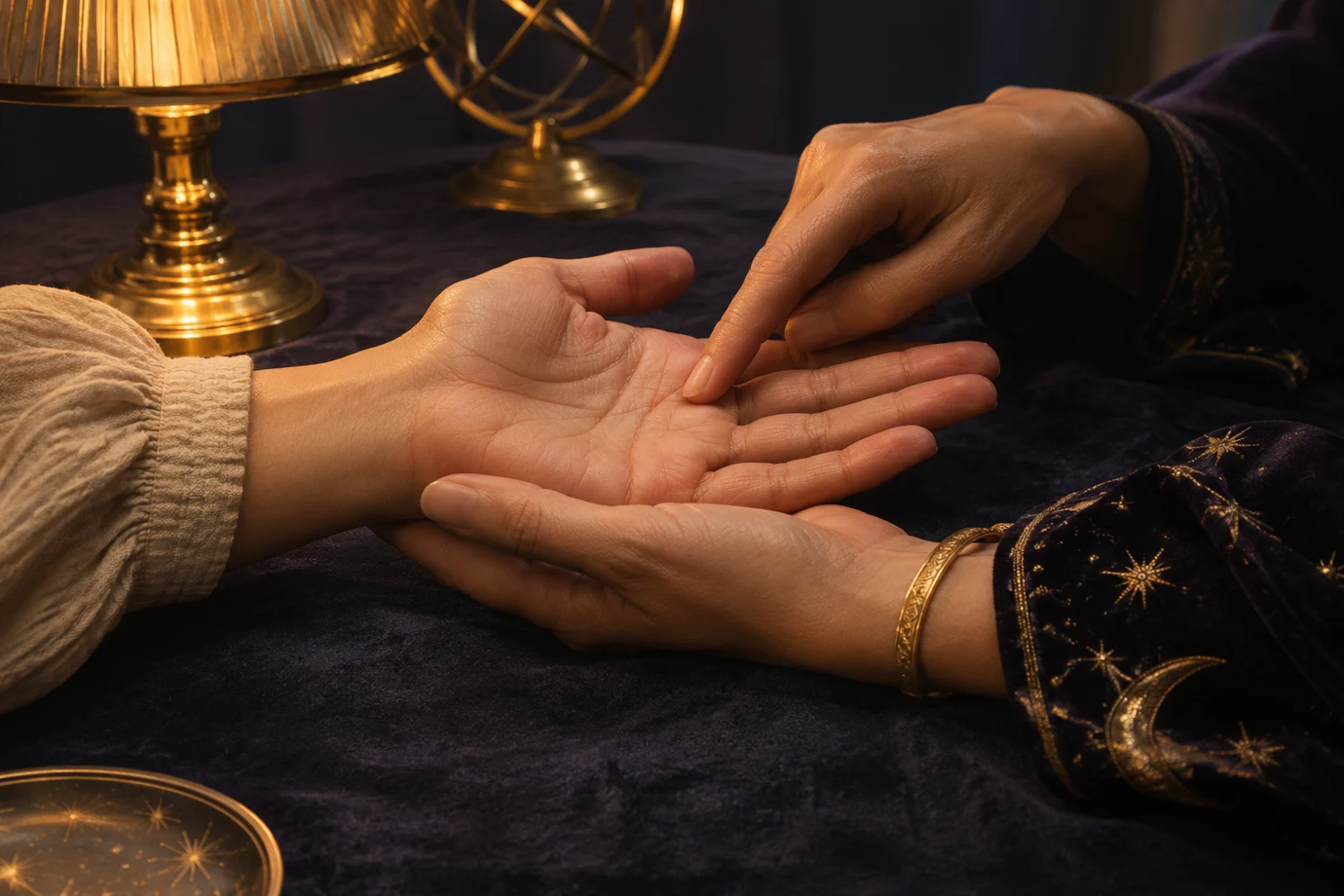
Western palmistry is the tradition most people picture when they think of a palm reading. It is one of the three traditions Ozzy draws on.
Where it comes from
Its roots are often traced to ancient Greece, where palm reading was known as chiromancy. It developed through medieval and Renaissance Europe and became widely popular in the nineteenth century, when writers organised it into the system many readers still use.
What it looks at
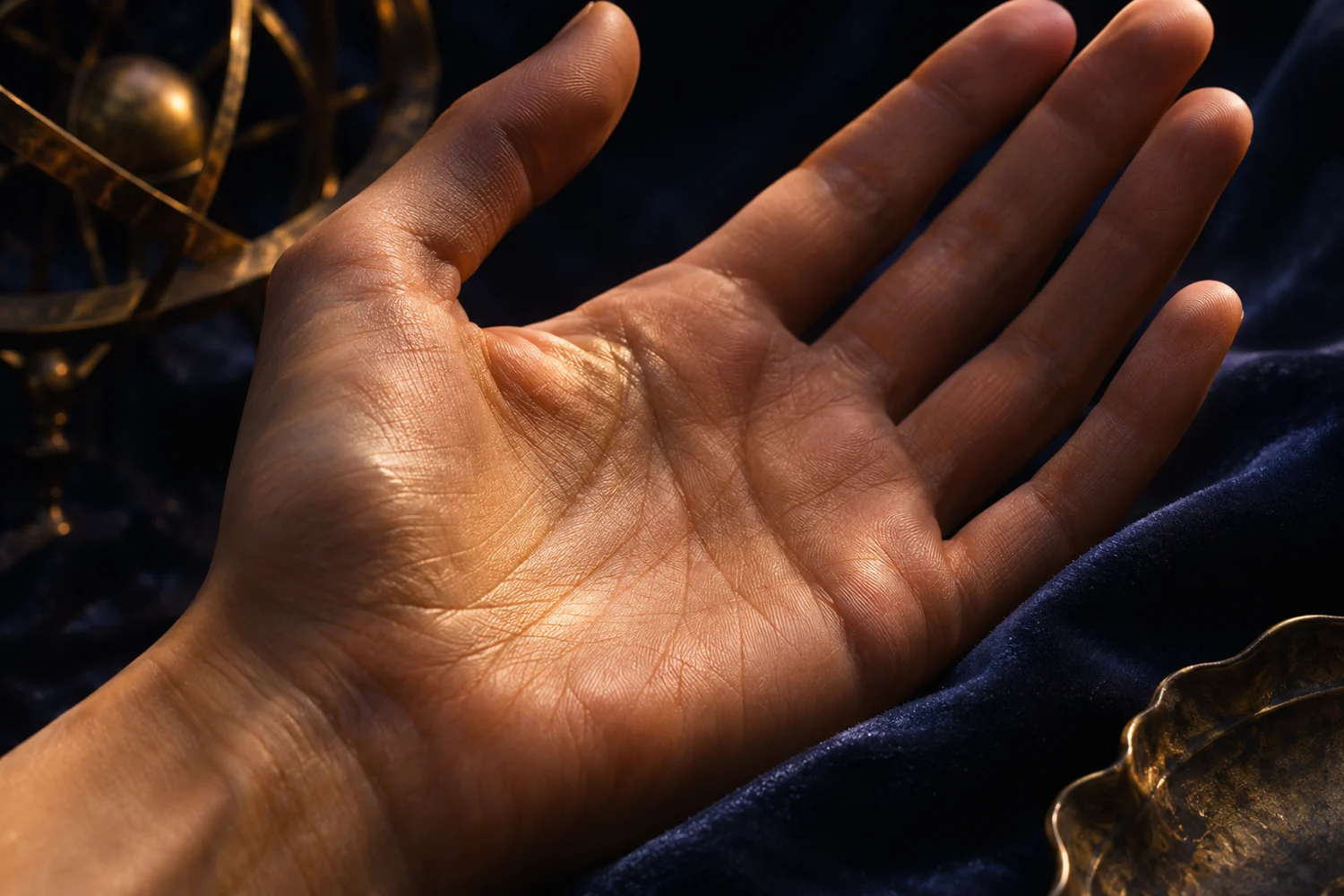
- The major lines: the heart, head, life, and fate lines are read as themes of feeling, thinking, vitality, and direction.
- The mounts: the raised pads of the palm carry the names of planets, such as Venus at the base of the thumb and Jupiter beneath the index finger.
- Hand shape: many modern readers group hands by element (earth, air, fire, and water) to describe temperament.
- Fingers and thumb: their length, shape, and flexibility add detail to the picture.
How to approach it
Western palmistry reads the hand as a symbolic language. Different schools interpret the same feature in different ways, and no single line tells your whole story.
Use what you learn as a prompt for reflection. A reading is a conversation about themes, not a prediction or a health assessment.